Showing posts with label natural parenting. Show all posts

Wide Open Days


There is something very special about bright and warm spring days spent almost entirely outdoors. Taking advantage of wake-up temperatures already in the 60s, we headed outside early with a fully stocked picnic basket, books, and a plan to spend most of the day playing outdoors, in nature.

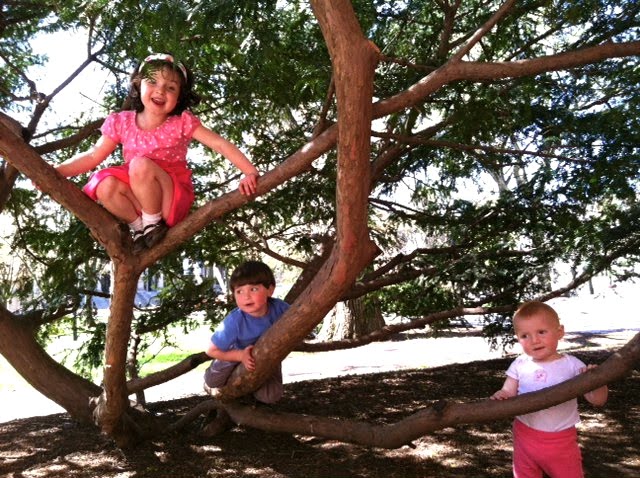
We spent a long while in a quiet corner of nearby Harvard Yard. My littlest one napped in the fresh air while the big kids climbed trees, played hide-and-seek in the shrubs, and made up their own creative games underneath shady branches and in hidden corners in front of old buildings.


While picnicking, we said hello to a passing acquaintance and her children. She remarked that she had been neglectful in not planning well for this April school vacation week and was seeking ways to fill their days to stave off boredom. As I write this week about "natural learning" ahead of Sunday's Earth Day celebration, this conversation reminded me of a fantastic quote in Richard Louv's book, Last Child in the Woods: "We need to draw an important distinction between a constructively bored mind and a negatively numbed mind. Constructively bored kids eventually turn to a book, or build a fort, or pull out the paints (or the computer art program) and create, or come home sweaty from a game of neighborhood basketball."

As parents, we can sometimes be overly-focused on making sure our children's days are fully enriched with dynamic classes and activities to keep them from being bored, when, in fact, boredom--and the important ability to overcome it independently--can be an even greater lesson for our children. I think that if we parents can overcome our anxiety about our children's potential boredom and unstructured time, then we will see that children have an amazing talent for making their own play, for finding interesting ways to occupy themselves, for unleashing their imagination -- especially outside, in the natural world, on warm, wide open April days.

Louv reminds us how important it is to understand and embrace boredom. He states: "Most of all, children need adults who understand the relationship between boredom and creativity, adults willing to spend time in nature with kids, adults willing to set the stage so that kids can create their own play and enter nature through their own imagination." There is so much to do on these wide open April days, so much nature to explore, so many trees to climb, so many opportunities to create, to wonder, to dream.

From Natural Parenting to Natural Learning


Families are drawn to homeschooling for a variety of reasons, but for many families who believe in the ideals of "natural parenting," ours included, homeschooling is an obvious extension of this chosen lifestyle. Natural parenting is a broad term that encompasses many parenting practices aimed at being as natural, ecologically sustainable, and holistic as possible. It includes practices such as natural birth and breastfeeding, organic and sustainable food and consumption habits, cloth diapering or elimination communication, homeopathic and holistic family care, attachment parenting, and natural learning.

It is not surprising that as a growing number of new parents embraces natural parenting, these parents eventually become inspired by the idea of natural learning and homeschooling. Our early closeness and connection with our children helps us to develop positive, trusting relationships with each other. As natural parents, we are deeply aware of our children's needs, strengths, and limitations, and we use this knowledge to guide our parenting approach in the early years. As our children grow, we notice their innate gifts and passions unfold and we follow their lead, their unrelenting curiosity, as they learn and discover.

Most significantly, natural parenting focuses on trust: trust in our own powerful parenting instincts and abilities, and trust in our children to lead us, to show us what they need to learn and grow and reveal their true talents. Homeschooling extends this natural parenting and natural learning process beyond infancy and toddlerhood. It builds family trust and strengthens family relationships, and it grants children the uninterrupted freedom to learn and grow in their own, natural, intended way.

As an important extension of natural parenting, many natural learning families also place significant emphasis on learning from, growing in, and caring for the natural world. Through ecologically sustainable homemaking practices and extensive time spent outdoors, in nature, natural learning families prioritize their critical connection to the natural world. Homeschooling offers the gift of vast amounts of free, unstructured, exploratory time to learn from nature.

In Last Child in the Woods, author Richard Louv states: "The boundaries of children's lives are growing ever tighter." A commitment to natural learning and time spent connecting our children to the earth, loosens these boundaries, unlocks our children's spirit, and widens our trust in nature's wisdom.

Natural Learning

Earth Day is a week away, so I'll spend some time this week blogging about natural learning and using the natural world as our children's classroom.


I can think of no better classroom than the natural world. And on a warm April morning, an empty Cape Cod beach was the perfect classroom for family discoveries. Slowly emerging sandbars revealed sand dollars to marvel at, shells to be collected and saved for late-day painting projects, piping plover footprints to spot and track. Outside, at the ocean, barefoot in the sand, we enjoyed hours of connection with nature and with each other. Moving from individual sand-castle-building to collective rock-hunting, yesterday morning took on its own tidal rhythm for our family, replenishing us with sunshine and salty air.

In his popular book, Last Child in the Woods: Saving Our Children from Nature-Deficit Disorder, author Richard Louv states: "Children need nature for the healthy development of their senses, and, therefore, for learning and creativity." As parents, it is our responsibility to carve out this time in nature for our children, to value and prioritize it, not only to help spark our children's learning and creativity, but to help them to develop a deep appreciation for the natural world and their place in it. In Last Child in the Woods, and in his most recent book, The Nature Principle, Louv states that the rise in technology, the increasing digital influences that can both enhance and distract our days, require us to spend even more time in nature, more time disengaging from a wired world and reconnecting with a wild one.

It's not that we should be neo-Luddites, rejecting the good and powerful role of technology in our lives, but we should be mindful of how technology can make us more disconnected from nature and from each other. As Louv states in Last Child in the Woods: "The problem with computers isn't computers -- they're just tools; the problem is that overdependence on them displaces other sources of education, from the arts to nature."

It is up to us as parents to be watchful of creeping technological distractions, both for our children and for ourselves, that can minimize our family time outdoors, in nature. It is up to us to prioritize natural, unstructured, outside play for our children, to uncover the many lessons nature teaches us, and to strengthen our connection with the earth and each other.

DIY Homemaking: A 'Made from Scratch' Life

Our Natural Family Living and Do-It-Yourself Homemaking theme continues today with a guest post from Justine at The Lone Home Ranger, who shares how she has cultivated a "made from scratch" life.


If you told me a few years ago that I'd be making homemade crackers, I would have laughed at such a preposterous notion. I've always loved cooking, using seasonal and local ingredients; however, when I worked outside the home, I was focused on trying the newest recipes in glossy magazines. I daydreamed about the fancy tools I would one day buy from the dog-eared pages of the Williams-Sonoma catalog. I didn't have time to ponder making my own pantry staples, and I lacked the confidence to try baking. Failure was not an option on the table.

When I made the choice to stay at home, our lives slowed down in many ways. As a homesteader, I've learned to embrace failure as a part of everyday life and, even better, my four-year-old daughter knows that mistakes are part of the learning experience. We welcome new challenges and are confident that with a little hard work, we can figure out how to make anything together. She rolls up her sleeves, turns to me, and says "Let's get to work." Our hands are our favorite tools.


What we eat has perhaps changed more than anything else. Last year, I found The Beekman 1802 Heirloom Cookbook: Heirloom fruits and vegetables, and more than 100 heritage recipes to inspire every generation and became fascinated with their return to such basic recipes, made with real food ingredients, that have been passed down through generations. I became inspired to try my own family's recipes. I started small by calling my mom to get her grandmother's high-rise yeast bread recipe. The kids helped me with kneading. Playing with dough and flour was a great sensory experience for them. I succeeded on the very first try and gained confidence.

Since then, my repertoire of homemade foods has expanded to yogurt, cheese, and even crackers! The Urban Farm Handbook: City Slicker Resources for Growing, Raising, Sourcing, Trading, and Preparing What You Eat has been a source of great inspiration to me, both in the guidance it brings and in showing me that each idea is an opportunity for change, not a standard by which I'll be judged. It's fun to tackle new challenges when I'm not pressured to fit into the mold of the perfect homesteader.


I see such a sparkle in my preschooler's eye as we sit down to a snack of all homemade foods. She daydreams about new foods she wants to try making; it's no surprise to me that jam and fruit leather are high on her list. We are also growing our first vegetable and herb garden this year, starting with seedlings in the office. The simple joy my kids gain from watching the seeds grow into plants and playing in the dirt brings peace to my home and lets me know we are on the right path for us.

Justine Uhlenbrock is an urban homesteader, a minimalist mom, a writer, and a doula-in-training living with her husband and two young girls in Arlington, Massachusetts. She is passionate about sustainable living, health, frugality, and her quest for real food and family heirloom recipes. She blogs at The Lone Home Ranger.

DIY Homemaking: Colorful Cloth Napkins

Our Natural Family Living and Do-It-Yourself Homemaking theme continues today with a guest post from Shel at One Sweet World, who shares how her family took a simple and fun step to reduce household waste.


A couple of years ago we switched from paper napkins to cloth napkins in an effort to help reduce the amount of waste that our family contributes to the world. In switching to cloth napkins we decided that each napkin could be used more than once as long as it wasn’t crazy messy. In order to remember to whom each napkin belonged, we first started using different napkin rings. I found some on Etsy that I loved but I was the only one who could tell whose napkin was whose. After a year of using the napkin rings we realized that we definitely needed an easier way to distinguish each other’s napkin. And then a thought occurred to me: we could tie-dye them!


Grace and Emma did most of the work themselves, selecting colors and placement. The end result is 12 gorgeous and distinct cloth napkins that we adore. Not only does the dying make them much easier to tell apart, it also helps to hide the stains of family meal times!

Switching to cloth napkins has been an easy step to reduce our family's waste, and dying them made the experience all the more meaningful and enjoyable. If you decide to tie-dye, there are many natural dyes to choose from, or you can make your own. There are also dying kits available at most craft stores. Now, almost a year later, our napkins look just about as good as the day we made them!

Shel lives, laughs, loves and learns alongside her husband and two young daughters in an old New England farmhouse. She blogs at One Sweet World.

Thinking Off-the-Grid


Thinking is the key word here. I am so very far from being off-the-grid. For one, I am much more comfortable with traffic than with ticks. Probably my only "off-grid" action is that we don't have cable. But it is intriguing, isn't it, to imagine a completely self-sustaining lifestyle? To imagine this pinnacle of "natural family living" and "do-it-yourself homemaking?" It's fascinating to imagine a life, or at least a part of one's life, that is slower, quieter, simpler. What would it be like to procure our own water, produce our own home energy, compost our own waste, and live in a way that is more connected to the Earth and less connected to the Internet? Fascinating.

My recent interest in off-the-grid living, or homes that do not connect to primary utility grids, has been piqued by the bedside book I am reading: Off the Grid: Inside the Movement for More Space, Less Government, and True Independence in Modern America, by Nick Rosen. A breezy look at a diverse group of individuals and families that have gone "off-grid," either for a primary or secondary residence, the book exposes the highlights and challenges of living in a more deliberate, self-sustaining way.

I would never want to give up entirely the vibrancy, diversity, compactness and car-free convenience of urban living, but I also find the idea of back-to-the-land living so inviting. I find it striking that in really only one century, we have somehow managed to become almost entirely ignorant of the fundamental skills that our ancestors relied on for survival. I have only recently realized how completely clueless I really am. I am taking baby steps to reclaim the knowledge and skills of earlier generations, but learning how to knit and sew and bake my own bread are really just the tips of the iceberg. There is so much more I don't know, so many ways that I am completely disconnected from the food I eat, the clothes I wear, the water I consume, the energy that runs my home.

Imagining a life in which I am much more connected to these things, a life in which I am more enmeshed in the nitty-gritty of food and waste and energy, is a worthwhile thought exercise even if it doesn't become a reality. According to Rosen's research, however, at least half of the off-the-grid residences in the country today are used by part-time "off-gridders," those using an off-the-grid parcel as a second home or respite. These off-gridders "are downshifting city dwellers who want a refuge in a tranquil spot," says Rosen. Maybe that describes me. Or maybe that describes me thinking about that tranquil spot where "natural family living" and "do-it-yourself homemaking" are all there is. Fascinating.

Homemade Natural Toothpaste

Welcome to the April 2012 Carnival of Natural Parenting: Kids and Personal Care
This post was written for inclusion in the monthly Carnival of Natural Parenting hosted by Code Name: Mama and Hobo Mama. This month our participants have shared stories, tips, and struggles relating to their children's personal care choices.

In keeping with this week's blog theme of natural family living and do-it-yourself homemaking, today I am delighted to share a guest post from Nina Litovsky, a local homeschooling and natural parenting mom who has a homemade natural toothpaste recipe that's kid-friendly, easy to make, and good for the whole family!

I make my own homemade natural toothpaste which is completely free of fluoride, preservatives, and any other chemical substances. It tastes good and can be safely swallowed, which makes it a good training toothpaste for little kids. My toddler loves it! It has become our official family toothpaste of choice.

Why homemade?

Initially, I was looking at commercial options. I didn’t want fluoride in the toothpaste because I was concerned about its toxicity and I had doubts about its benefits (but that’s another story). I also wanted something that would be safe to swallow, as I was about to train our baby to brush her teeth. All the commercial brands I found seemed to have some kind of preservatives or other chemical substances and I was not exactly sure that these substances were completely nontoxic.

So I did a lot of online searching and gathered some tips here and there, and finally put together a recipe to make my own toothpaste, which would at least guarantee the quality I was looking for. Also, most homemade toothpaste recipes I saw seemed to be a little complicated and time-consuming. I wanted to create a very quick and easy recipe, with very few ingredients.

The recipe

It is a very simple recipe, requires only 3 ingredients, and is a breeze to make!

Just take equal parts of calcium bentonite clay, xylitol and water. To make a solid, thick toothpaste, first you mix xylitol and bentonite and then add water. (I use water from our filter which blocks fluoride and a bunch of other toxins). You cannot add too little water – always add a bit extra if in doubt. You’ll see this when you start mixing it: if it is too dry, add more water. Mixing should be done in a porcelain, glass, or wood bowl using a porcelain, glass or wooden spatula or similar utensils.

Why porcelain, glass, or wood? Because clay has strong absorbent qualities, and if you use plastic (even BPA-free) or metal utensils, your clay may draw out unwanted plastic or metal particles.

The resulting toothpaste mixture looks like clay. Xylitol is a natural sweetener so it tastes good. If you’re feeling adventurous you can mix in veggie-based dyes or flavors.

How to use it

Open the jar, scrub with your toothbrush in a circular motion to get a good chunk of the paste smeared onto your brush. Brush one jaw, rinse and repeat. Or experiment to see what works for you. The idea is to smear a good amount of the paste onto your teeth. After you rinse your mouth, don’t worry if some of the paste is still stuck to your teeth. It will dissolve but in the meantime in will collect the bacteria.

How to store it

The toothpaste can be stored in a glass jar or a wooden/bamboo container (I’d say glass is better around sink moisture). It shouldn’t go "bad," but it is a good idea to cover it up, not airtight though. What works best for us so far is the jar pictured in the photo above. The lid is a little loose and allows for some air circulation inside the jar. You might want to experiment to see what works best for you to prevent mold.

For hygienic reasons each person should have their own container.

As for the toothbrush, it might be hard to completely rinse off the sticky paste. What I do is rinse the toothbrush a little bit and then put it in a glass of water and keep in there. The water in the glass will get a little “muddy” because of the clay but it’s ok. I think that the clay, due to its antibacterial qualities, will cleanse your brush the same way it cleanses your teeth. Eventually most of the clay should dissolve in water by the time of your next tooth brushing.

Where to buy the ingredients

Both bentonite and xylitol can be bought in bulk in 5-pound bags. Make sure that both are made in the USA (and that xylitol is not from corn but rather from birch, which is another sign it is made in the USA). Bentonite can be bought from BestBentonite.com. Please note: although it may not be immediately clear from the description on that website, they sell calcium bentonite, which is what we are using in the recipe.

Or you can buy on Ebay from the same supplier. As for xylitol, it looks like it is getting more popular, hence competitive pricing on Amazon.

Why bentonite clay

Bentonite is known to have some antibacterial properties, but how these work in a toothpaste is not presently known. It is a mild abrasive and therefore has cleansing qualities. Basically, the clay sticks to your teeth and draws out plaque and bacteria. You can do your own research on the benefits of bentonite using these sources:

Bentonite and Gum Disease
Medicinal Uses of Bentonite

Disclaimer

I am not a chemist or a dentist and I don’t guarantee that my recipe works for everyone. It seems to work for my family and my dentist doesn’t complain. According to my research, bentonite has cleansing and antibacterial qualities and is good for the gums, and xylitol is known to help prevent tooth decay. So I'm sharing this recipe with the hope that it would work for you or inspire you to try your own. Please don’t expect this toothpaste to heal your teeth in case you already have cavities. I personally don’t believe ANY toothpaste can heal existing cavities. This toothpaste is for preventive care only and doesn’t replace other important ways to care for your teeth, such as frequent flossing and good nutrition.

Nina Litovsky is a homebirthing, homeschooling, natural parenting mom living with her husband and two young children in Newton, Massachusetts. Besides parenting, Nina runs her own home-based web design studio and enjoys a variety of hobbies such as flute, tennis, and mixed martial arts.


***

Carnival of Natural Parenting -- Hobo Mama and Code Name: MamaVisit Code Name: Mama and Hobo Mama to find out how you can participate in the next Carnival of Natural Parenting!

Please take time to read the submissions by the other carnival participants:

(This list will be live and updated by afternoon April 10 with all the carnival links.)

The Natural Family Living Movement

It seems there's a growing movement afoot of families seeking to live more naturally, more simply, more connectedly.

We read about it in articles citing increasing rates of homeschoolers, and rising numbers of homebirthers. We see it in neighborhood gardens and backyard chicken coops. We notice it in consistently sold-out local courses on knitting, and sewing, and other handiwork. We hear about it in conversations with friends and neighbors seeking a return to times of simpler homemaking, times when vinegar was the go-to cleanser, when sunshine was the greatest disinfectant, and when growing and preserving food were part of the seasonal rhythms of each family. We feel it in the growing demand for alternative, holistic healthcare solutions for families, and for greater trust in natural healing. It's all around us, this reconnection with do-it-yourself homemaking and natural family living.

We all arrive at our focus on natural family living from different places and for different reasons. For some of us, it is a rejection of the way things are and for others it is an acceptance of the way we think things ought to be. I've mentioned before that while I started on the natural parenting progression when I became a mom, embracing Attachment Parenting principles, discovering cloth diapering, and becoming passionate about homeschooling, it wasn't until my daughter's homebirth a bit over a year ago that I became truly awakened to the magnitude of what we are able to accomplish within our homes, within our families. I began to more seriously question mainstream parenting and homemaking practices, and reclaim home as the center of family life.

This week, I will be presenting posts highlighting natural family living and do-it-yourself homemaking, including some guest posts. I would love to hear how and why you have embraced natural family living. And if you would like to guest-post on this topic, please let me know!

Beware of Sabotaging Squirrels...

We celebrate Easter secular-style, which for us means we enjoy the Easter Bunny and learning about its origins as a celebration of Eostre, the ancient goddess of springtime, whose earthly sign is a rabbit and who hides bright eggs and treats as symbols of the sweetness of springtime renewal.

Last year, we were committed to having an all-natural Easter. We grew our own grass to line our Easter baskets, dyed our own real eggs in natural dyes (like beet juice and blueberries), and then left the eggs on our back porch with a note for the Easter Bunny, Eostre, suggesting she hide these lovely eggs along with treats in our building's small backyard.  She obliged, but apparently didn't notify the city squirrels (who mean business around here).  Within minutes of the Easter Bunny's arrival, while we were not looking, the squirrels confiscated 88 pieces of chocolate candy! Yep, 88 pieces.

We know this because we caught a couple of them in the act, and then throughout this past year we have discovered the shiny, colorful, candy wrappings strewn throughout the backyard as the squirrels slowly consumed their buried treasures.

So this year, we have little choice but to be unnatural. We are going back to standard-issue plastic eggs in which to hide Easter chocolates, and are hoping that these squirrels can't figure out how to crack them before the kids in our building have a chance to collect them. Given the fact that just this week, one squirrel unzipped my backpack, grabbed my zippered, cloth snack bag filled with cashews, and scurried up a nearby tree with the snack bag in its mouth, I am not entirely confident that our plastic eggs will be enough protection against these determined city squirrels.

Maybe Eostre can use some of her springtime magic to keep the squirrels at bay just long enough for our egg-hunt. And we'll be sure to share a few chocolates with our backyard friends as a thank-you.

10 Natural Parenting Commitments

I find that sometimes, in the bustle of everyday life with three little ones, I can get distracted from the parenting and homemaking practices that are most important to me.  So I am writing down my most important natural parenting commitments, those practices that are central to the philosophy of our family life, in the hope that they remain top-of-mind even among all those distractions.  Here they are, in no particular order.

Top 10 Natural Parenting Commitments:

  1. It is important to me that I parent with love, respect, responsiveness and gentleness.
  2. It is important to me that I listen to and understand my children's needs.
  3. It is important to me that I facilitate my children's natural curiosity and encourage them to learn and grow in their own way, in their own time.
  4. It is important to me that I model the behaviors I expect from my children.
  5. It is important to me that I position family at the center of our lives.
  6. It is important to me that I feed my family wholesome, homemade, mostly-organic, preferably local, real food.
  7. It is important to me that I trust my powerful maternal instincts, especially when making decisions about my family's health and well-being.
  8. It is important to me that I strive to live more sustainably, seeking ways to treat the earth with greater care and thought.
  9. It is important to me that I make my home a greater source of production, rather than exclusively consumption.
  10. It is important to me that I continuously question, challenge, and inquire to reveal what is best for my family.  
What might your list look like?  Have you written down a mothering mission statement or a set of commitments that guide your parenting?  What impact has it had?

Instinctual Parenting

It seems we've lost our way. It seems that somewhere over the past century in America, as technological advancements, increased industrialization, and focused specialization promised to make our lives easier and simpler, they led us away from our own voice, our own instincts, and in so doing made our lives more complicated and stressful. Nowhere is this more obvious than in parenting.

Rather than trusting our own instincts and listening to our babies, from birth to toddlerhood and throughout childhood, we began abdicating control and losing touch with our natural wisdom. From placing control of our pregnancies and births into the hands of obstetricians and hospitals, to believing that babies should sleep through the night, to trusting large food conglomerates to feed our families, to relying on others to care for and teach our children, we have weakened the power of home and family and muffled our own parenting instincts.

Reconnecting with our instincts, listening to our inner voice and the needs our children so clearly communicate to us in their own way, can guide us back to trusting ourselves. It can help us to question the origin of some of our beliefs and expectations, and filter the barrage of "expert" advice. Who says my infant needs to learn to self-soothe? Who says children need to sleep alone, away from mommy and daddy? Who says I need to introduce solid food at six months if I don't think my baby is ready? Who says my two-year-old needs to learn to be independent from mommy? Why should I give my toddler time-outs? Why should my five-year-old get a dental x-ray for no apparent reason? Why should children be made to sit still and listen when their natural instinct is to run and shout?

We can learn a lot about reconnecting with our natural parenting instincts by watching our children, watching how they live with full authenticity and trust. Their needs are simple and straightforward, and when we listen and respond to them by trusting our own instincts, ignoring the reel of "should-bes" that rolls through our thoughts, we can experience more joyful parenting.

Trusting our instincts and parenting more peacefully is the topic of a new book just released by two Boston-area moms. The Other Baby Book: A Natural Approach to Baby's First Year, by Megan Massaro and Miriam Katz, helps new parents to trust themselves rather than entrusting others to care for their baby's well-being. A must-read for new parents or others looking to parent more naturally, more instinctually, the book is full of thoughtful insights that help parents to question mainstream parenting beliefs and actions.

What about you? How have you been able to trust or reconnect with your own, natural parenting instincts, even if they run counter to current mainstream parenting practices?

Choosing a Slower Childhood


I was struck recently by this quote in an article written by Simplicity Parenting author, Kim John Payne: "Ultimately, it comes down to a choice. Parents need to decide whether they believe childhood is a fast-paced enrichment opportunity or a slowly unfolding experience."

We choose the slow and simple. And yet, a slow and simple childhood in today's increasingly fast and complex world is a choice that needs constant vigilance. So many fascinating activities and exciting children's programming here in the city could easily sweep us off our feet and consume the precious time my children have to just be--to imagine and create and grow--slowly and steadily.

On summer-like days here in March, unexpected and entirely welcomed, I am reminded more prominently of the gift of allowing childhood to be a "slowly unfolding experience." Spending nearly all of our daylight hours outside, drinking in the sunshine and warmth, I can almost see childhood unfolding naturally, peacefully. I can see siblings collaborating on important backyard projects. I can hear whispers of fairies and magic and all that's possible. I can watch trees get climbed, feet get muddy, sticks get transformed, dreams get planted.

I observe this quiet unfolding of childhood, just as the crocuses and daffodils quietly unfold around us, and marvel at its simple, uninterrupted beauty. In truth, it's really only been in the last few years that I have truly seen spring unfold: deeply and intentionally noticed the first buds, the first burst of color. It was in these last few years that my children introduced to me a slower, more deliberate pace--a pace necessary to spot each new bud and petal. My children are completely enchanted by spring's new discoveries and force a stiller, steadier, more observant rhythm to appreciate all that emerges around us.

I learn from them. I learn to go slower, to notice more, to appreciate more, and to protect the extraordinary unfolding of childhood.

I Am An Unapologetic Homebirther

Over the past week, I have been writing posts signaling that while I think more parents should seriously consider homeschooling, I am sympathetic to the parents who are passionate about traditional schooling and find private or public school to be a good fit for their family. If you ask me, I think the 80/20 rule would work well for education, with 80% of families choosing traditional schooling, and 20% choosing homeschooling, compared to 3% currently. (For comparison, currently about 11% of students in the U.S. attend private or parochial schools.)

Homebirth, on the other hand....

I wonder if it's because I have seen both sides of birth that I am unapologetically pro-homebirth, to the point where I think the 80/20 rule should mean 80% of births are at home and 20% are at hospitals, compared to 99% currently. I experienced first-hand the serious, even life-threatening, complications resulting from big hospital births and unnecessary inductions with my first two babies. I finally realized with my third baby that I HAD to have a natural, non-interventive birth if I wanted to have a safe delivery, and the only way I felt certain of having a completely natural birth was to have one at home.

In my third trimester of my third pregnancy, I went for a tour of the smaller hospital's labor and delivery (L&D) ward, the hospital where I was considering giving birth with a midwife instead of the big hospital with the OB that I had experienced previously. This smaller, regional hospital had a good reputation for valuing natural childbirth, but almost as soon as the L&D tour began, I knew I couldn't have a baby there. The clincher for me was the big, red, digital timer clock on the wall of the delivery room. When I asked the tour guide the purpose of the big timer, she downplayed its importance, saying that it may be used once a laboring woman's water broke or once she started pushing. To me, it was like the overtime stop-clock for a Celtics-Lakers game, measuring my every move against a hospital's policies and expectations. At that moment, I knew I couldn't have a hospital birth. On the ride home from the hospital tour, I called my homebirth midwife to sign on for what would become a defining, life-changing experience.

So this homebirth experience leads me to wonder: would I be more relentlessly, unabashedly pro-homeschooling if I had a poor traditional schooling experience? I am relentlessly, unabashedly pro-homebirthing because I honestly and with full conviction believe that most babies should be born naturally, at home, with trusted midwives. But I have seen the other side. I have seen first-hand--TWICE--the clear and present dangers of hospital births, and I believe, beyond a shadow of a doubt, that for most women birth belongs at home.

But homeschooling? I had a decent K-12 public school experience, though I feel that much of it was a waste of time. I liked school, participated in many rewarding extra-curricular activities, got accepted to top colleges. But still, I want more, better for my children. My reasons for advocating homeschooling and homebirthing are different. Both are ideologic and personal, but with homebirthing, I have witnessed first-hand the other side, the dangers of an OB-orchestrated, institutionalized birth.

The passion I feel for homebirth, then, may be similar to the passion friends of mine feel about homeschooling, friends who have "seen the other side," whose children have been betrayed by a large, traditional government-school system that operates under its own rules of efficiency and self-protection just like hospitals.

So the bottom line is that while I am passionate about both homeschooling and homebirthing, for me, the latter is much more of a rejection of currently accepted practices while the former is an acceptance of a particular family lifestyle and child-rearing approach.

What about you? Are you accepting something for what it promises, or rejecting something for what it fails at?

Join me today at Rhythm of the Home....

I am honored to again have an article included in my favorite online magazine, Rhythm of the Home.

Please join me today in reading the many warm and inspiring articles in the just-released Spring issue.

In light of my article on "Springtime Puddle-Stomping," I am also participating in Rhythm of the Home's Blog Giveaway and am giving away a $50 L.L. Bean Gift Card (for all that puddle-stomping gear, you know). I am also giving away an ADDITIONAL $50 L.L. Bean Gift Card here on my blog!

So... you have two separate chances to win! Visit the Rhythm of the Home Blog and enter the giveaway AND enter below by "liking" the City Kids Homeschooling Facebook page or Facebook post, leave a comment, share this giveaway and more!

Winners for both giveaways will be announced on March 7th.

Good luck and thanks so much for visiting!


a Rafflecopter giveaway
Join the City Kids Homeschooling Facebook community!

How We Became Unschoolers

When my husband and I first committed to homeschooling when my oldest was just two-years-old, I thought for sure that by the time she was five we would be following an age-appropriate, established curriculum--at least for certain subject areas--and would have time allocated each day for "teaching & learning." In those early days, when I would talk to the homeschooling moms of older kids at homeschool park days or similar meet-ups, I thought those "unschooly" moms were a little "out there." They were a bit too radical, I thought, just letting their kids do whatever they wanted, not requiring mastery in certain areas at certain times, not establishing expectations for academic performance. Radical.

And now here I am. Radical and out there. And loving every minute. (Ok, almost every minute.)

It wasn't that I woke up one day and decided to become radical. It wasn't that I was trying to make a point or hop on a bandwagon. It was that I actually saw my children learning, of their own accord, following their own developing interests, without my tutelage. I watched as their natural, innate childhood curiosity guided them to discover and explore and widen their imaginations. I watched as my oldest learned how to read, not because I sat with her to review letters and sounds and "sight words," but because she was surrounded by literacy and was ready to read. I watched as she grew increasingly interested in mathematical concepts, not from using a math curriculum or reviewing math problems, but because she was surrounded by numeracy and wanted to know more about how numbers and patterns could be applied. I watched as she became increasingly interested in learning the piano, in practicing and experimenting, not because I told her to practice or because her piano teacher asked her to, but because she was excited about making music. I saw her doing things, learning things, mastering things that I would never have thought to teach her; and that maybe if I had taught her, might not have resulted in so much originality and skill.

I realized, through the fascinating process of watching my children learn, to trust them: to trust a child's natural drive to know and create, to explore and synthesize. I realized that "unschooling" allows this natural learning to occur in many unanticipated and meaningful ways by allowing our children to show us the way, to reveal to us their passions, their gifts, and to constantly astound us with their capabilities when given the time and space to develop them naturally.

I learned that I am not my children's teacher. I am their follower.

Radical.

I'm a natural parent, but...it took me awhile

Welcome to the "I'm a Natural Parent - BUT..." Carnival

This post was written for inclusion in the carnival hosted by The Artful Mama and Natural Parents Network. During this carnival our participants have focused on the many different forms and shapes Natural Parenting can take in our community.

***

I knew I wanted to breastfeed. That was about the extent of my "natural parenting" when I first became a mom. I didn't even know what natural parenting was at the time. Breastfeeding was the gateway to more natural parenting for me, but it would take awhile before I really caught on.

When I was pregnant for the first time, I chose an obstetrician affiliated with a large, Boston teaching hospital. I thought: "We have some of the finest hospitals in the world! I would be a fool to birth my baby anywhere else!" At the "meet the doctors" event just prior to giving birth, *I* was the one who asked how quickly I could get an epidural once admitted. Needless to say, my first birth was highly medicalized. Fortunately, I was able to endure a few early weeks of wondering if I would really be able to breastfeed successfully. At eight weeks, I ignored my pediatrician's advice about "self-soothing babies" and brought my baby girl to sleep with me in my bed. Ahhhh.

A few months went by, I stumbled upon Dr. Sears and Attachment Parenting, and realized that it fit with my current parenting practices, like on-demand breastfeeding, co-sleeping, responsive parenting, and babywearing. Still, I was a long way from fully recognizing and appreciating what Natural Parenting meant. I fed my baby Gerber (not even organic! gasp!) and never thought twice about it. She was fully vaccinated and I never blinked an eye. She watched a lot of television while wearing her Pampers. She had lots of plastic, commercialized toys and apparel. Yep, I was a long way from truly appreciating Natural Parenting.

Not surprisingly, I returned to the same obstetrician for my second pregnancy and had another highly-medicalized birth. I continued all of my Attachment Parenting practices from the start with my baby boy and felt very strongly that he would not be circumcised. When he was four-months-old, I switched to all cloth diapers, and eventually started making my own baby food. Ok, I was getting there...

A few months later, when all of my two-year-old's friends were heading off to various preschools here in the city, (yes, preschool typically starts at age two here), I began researching homeschooling more seriously and became instantly hooked. Closer....

Then I had my third baby, my homebirth baby, and, finally, I understood the power and pleasure of living and parenting naturally. I began to fully question "expert" advice and generally accepted actions. I adopted "greener," more sustainable homemaking practices. I began making meals from scratch and buying local, organic food. I switched our doctors and focused more intently on natural family health and well-being. I started knitting.

I still have further to go, still much, much more to learn and do, along the Natural Parenting continuum. But I'm getting there. Gratefully, I'm getting there.

Join the City Kids Homeschooling Facebook community!


***

I'm a Natural Parent — But … Blog CarnivalThis carnival was created by The Artful Mama and Natural Parents Network. We recognize that "natural parenting" means different things to different families, and we are dedicated to providing a safe place for all families, regardless of where they are in their parenting journeys.

Please take time to read the submissions by the other carnival participants:

Have you "huggled" today?

Welcome to the February edition of the Authentic Parenting Blog Carnival, hosted by Authentic Parenting and Mudpiemama. This month, participants have looked into the topic of “Fostering Healthy Attachment.” Please scroll down to the end of this post to find a list of links to the entries of the other participants. Enjoy!

***
I give lots of "huggles," our family's fun word for hugs and snuggles. I always find that these huggles make everyone happier, calmer.

If I am having a rough mothering day, a day when the kids and I are particularly ornery, it's often because huggles are conspicuously absent. If I take a moment to stop, to notice, and then to bring my little ones closer, the mood changes, the day brightens, and we can move forward more peacefully.

Magic, I tell you, these huggles.

Or is it?

It turns out, maybe it's just chemistry. We know the "love hormone," oxytocin, fosters attachment with moms and new babies, and is also the hormone released during labor, breastfeeding, and sex. It brings people together, bonds them, makes them happier, more connected. It's profound, really, how something like a simple touch, a single display of affection, can alter our dispositions and transform a "bad" day into a better one.

These huggles are without question my best mothering trick. And they feel good too.

Join the City Kids Homeschooling Facebook community!


***

Visit Authentic Parenting and Mudpiemama to find out how you can participate in the next Authentic Parenting Blog Carnival!

Please take time to read the submissions by the other carnival participants:

  • "Keep Them Close and Let Them Go: Fostering Healthy Attachment As They Grow" — Helen at Zen Mummy wonders how to maintain a healthy attachment as our children become more independent.
  • "Honesty (With Your Children) is the Best Policy" — Mandy at Living Peacefully With Children shares how honesty with her children is helping to build an authentic relationship which will last through the teen years and beyond.
  • "Fostering Healthy Attachment?"Momma Jorje discusses how she is building a foundation of attachment with her children and how she hopes it serves them in their lives as they grow into adults.
  • Beyond Bookend Parenting — Marisa at Deliberate Parenting describes their efforts to maintain their toddler's attachment to her working parent through play and routines throughout the day.
  • Have You "Huggled" Today? — Kerry at City Kids Homeschooling shares how "huggles" work like magic in her home.
  • Your Childhood=Your Child's Childhood? — Amy at A Secure Base examines the research about how our attachment experience can shape our attachment with our children.
  • List-Making Activities to Celebrate Family Connections — Dionna at Code Name: Mama shares some family list-making activities that will help you reflect on what you love about your family and can spark ideas for future family fun.
  • How To Keep in Touch With Distant Grandparents — Lauren at Hobo Mama offers several tips to foster connection with relatives who live far away.
  • Beyond Bonding: The Power of Positioning in Babywearing — Steffany, a babywearing educator, guest posting at Natural Parents Network, explains how optimal positioning in quality carriers can help babies' physical growth, brain development, and overall attachment.
  • Playing Follow the Leader — Zoie at TouchstoneZ has learned that the more she meets her children where they are rather than where she would like them to be, the greater the elasticity of their bonds are.
  • The Evolution of Attachment: Parenting Without a Roadmap — Sheila at A Living Family reflects on her family's recent generation of mothers and shares how she is working to make an evolutionary leap towards forming healthy attachment.
  • Facilitating Sibling Connection — Laura at Authentic Parenting gives a set of pointers on how to facilitate sibling bonding.
  • The Farm in my Bed — Jennifer at Hybrid Rasta Mama discusses fostering children's healthy attachment to "lovies" and comfort objects.
  • My Early Morning Shadow — Valerie at Momma in Progress shares a few ways she maintains a strong connection with her almost six-year-old daughter.

Motherhood Is Messy: Wear Black

I have found that one of the key elements to happy motherhood is acceptance. Rather than be surprised that my little guy used me as a human napkin, I should have known better than to wear white when going out for a pasta dinner. I should have known that the marinara sauce might sting his face and he would need to wipe it off RIGHT NOW and that my sweater might be closer than his napkin. I should have known.

Now certainly we parents should redirect behavior (no, dear, mommy's sweater is not a napkin; here's yours), but the reality is that kids are just being kids and to parent peacefully we shouldn't fight these natural childhood tendencies, but rather anticipate and calmly manage them.

That is, we should wear black. Or at least not white. For a pasta dinner.

Have you heard of Authentic Parenting? I know a lot of you have and that it inspires and informs your parenting style. (Here is a nice article to learn more.) Authentic Parenting recognizes a truth about childhood: that children have authentic, legitimate, real needs that we parents must address to live peacefully with our children. It recognizes that children are not being intentionally malicious, or deceitful, or annoying. They are not doing things specifically to "push our buttons" or make us unhappy. Their needs are authentic and they are trying to communicate their needs in the only way they know how, often through their behavior. It is up to us as parents, I think, to recognize our children's needs as pure and authentic, to hear what it is that they are telling us, and then to address their needs. Most often with young children, their authentic needs relate directly to basic needs. They are hungry, tired, or uncomfortable. They need more attention, more affection. They need to feel safe and loved. They need to run around outside, or sit quietly and read a book. They need to play with others or spend some time alone. These are basic, authentic needs that we parents must continuously monitor and meet.

Sometimes meeting these needs is challenging. Sometimes it's inconvenient. Often it's messy.

We should wear black.