Showing posts with label waldorf homeschooling. Show all posts

My Little Baker


Yesterday at the playground, a man asked my five-year-old where she goes to school.  "I home-school," she replied.  "Oh, and what do you do in home-school?" he asked.  "Well," she responded, "I do as much math as I want to during the day because I want to be a baker."  "That's good," the man said, "baking does require a lot of math."

This entire exchange made me smile.  I always love to hear the kids' responses about homeschooling in their own words.

Whether or not my five-year-old will follow in the footsteps of locally-acclaimed Flour Bakery chef and owner, Joanne Chang, who has a degree in Applied Mathematics from Harvard, she is consumed by all-things-baking lately.  She devised a "Special Secret Cake Recipe," selecting all of her ingredients and measurements herself, and today she put her creation to the test.  It may not be the fluffiest cake, but it is definitely the best I've ever tasted...

Special Secret Cake Recipe

2 eggs
1 cup sugar
3 cups of flour
1/2 cup milk
1 tsp vanilla
1/2 stick of butter
Big mixing spoon

Mix all ingredients together.  Put in oven.  Bake at 350 until done.

Winter Homeschooling Rhythms


As we are now in the heart of winter, albeit a mild one at that, I thought it might be a good time to share our winter homeschooling rhythms for a sample week (click above graphic to enlarge). We are unschoolers and don't follow any set or structured curriculum, but nonetheless there is a certain flow to our weeks that changes with each season. Given this winter's moderate temperatures and lack of snow, we have been able to continue with many of our usual activities, like nature walks and homeschool park days. "Normal" winters would typically bring more indoor time, more slots in our week that would be filled with inside crafting or play, but I have been pleasantly amazed at the number of days this winter when our outside time has exceeded our indoor time. Even on the coldest of days, we try to get outside at least a couple of times a day for a short stroll to the library or coffee shop, or a faster dash to a museum or class.

These sample rhythms are a very rough snapshot of our winter weeks, failing to fully capture the amount of time we spend visiting with family members and enjoying time with friends. They also may seem rigid when in fact they are very loose. With the exception of swimming and piano, most of our other weekly activities are voluntary: we take advantage of them when we choose and pass on them if necessary. I have mentioned previously how hooked we are on the city's many drop-in, pay-as-you-go class offerings, which are invaluable to us as unschoolers and help us to pop in a fun activity here or there without the pressure of a weekly commitment.

Above all, we try to keep our children's schedule simple and serene. We try to keep a natural cadence to our days: calm, active, calm, active, calm. And we try to incorporate the city's many resources and events into our weekly rhythms.

As gentle as this winter has been, we are looking forward to spring's new rhythms, when so much of our day is spent outside spotting signals of rebirth and renewal, taking long nature walks, reading books on the grass, painting on our back deck, eating meals on the picnic table.

Our rhythms change, reflecting seasonal changes as well as changes in the interests and needs of our family. But the cadence remains the same, as does the comfort in centering our lives around family, community, and the natural world.

Winter Walks


There is something special about visiting the same nature spots repeatedly throughout each season, noticing their sometimes subtle, sometimes dramatic changes at different times of the year. They are at once foreign and familiar, these city oases. The kids explore and imagine, the grown-ups point out and observe, marveling at how much enjoyment and learning occur with a simple stick, a pile of leaves, a random patch of ice.

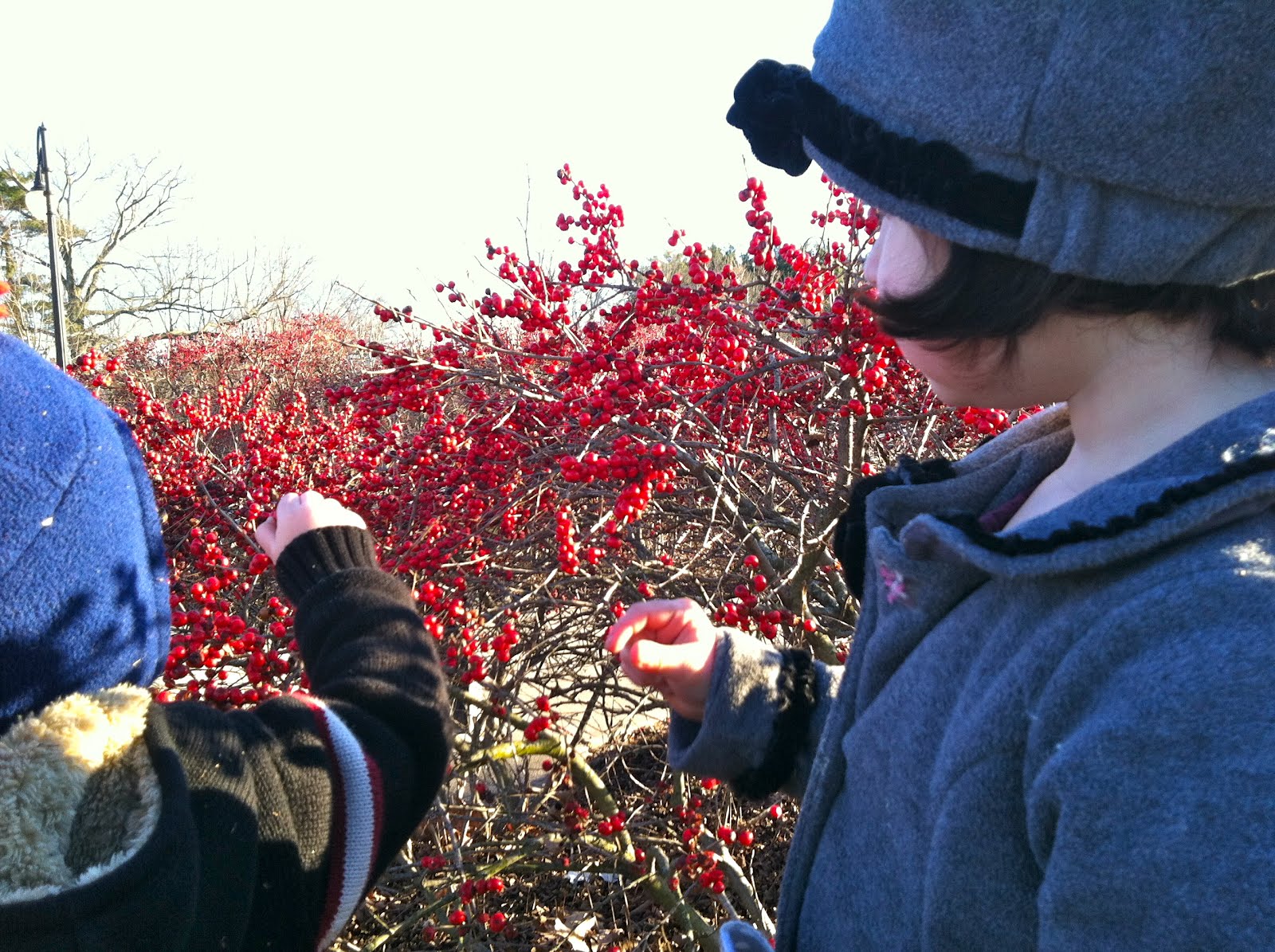
On a cold December morning, a quiet, wooded walk with friends reminds me of how important it is to make these winter walks a priority, even when icy temperatures bid us to stay inside, even when the effort to dress three fidgety little ones in layers of winter gear seems insurmountable. These winter walks are worth it. Spotting crows swooping, winter berries growing, squirrels still at work collecting and burrowing--all of these things reveal nature's important work, even in the chill of winter. And they reveal our need to be a part of this important work, to watch it, to learn from it, to respect it.

In prior years, I over-scheduled our winters with activities and classes for the kids that were designed to get us through this long, gray season. But I realized over the past few winters that these activities too often came to dominate our days, consuming our time and distracting us from fully noticing, fully appreciating what this season teaches us. I am learning now to keep winter simple. I am learning to help us do less and learn more. I am learning to focus the added preparation and travel time of winter into outside endeavors that connect us, however briefly, with the natural world around us--even here in the city. I am learning to let this season lead us, spur us, rather than holding my breath until spring arrives. I am learning to cherish these frosty winter walks, making them the cornerstone of our winter days, the cornerstone of our winter learning.

Celebrating Winter Solstice


Warm winter wishes to you at the start of this new season, a season of home, and comfort, and nose-nipping play. A year ago at this time, I started learning more about celebrating seasonal changes with children and using these natural markers of time to create meaningful family traditions and celebrations. The result for our family has been a much deeper understanding and appreciation of seasonal rhythms and the abundant learning opportunities inherent in each new tilt of the earth.

Celebrating the winter solstice this year has been particularly enjoyable, as we marked the time toward the shortest day and welcomed the returning light with a festive winter meal, holiday lights, winter bedtime stories by candlelight, and "solstice" muffins for breakfast.

As we sang, "Happy Solstice to you, Happy Solstice to you," I realized how much more gladly I welcome this cold and desolate season now than before. It used to fill me with dread, these long, dark, dreary indoor days of a New England winter. When my oldest was a toddler, winter felt endless. But I learned as our family grew to embrace these days more fully, to recognize them as a special time when we can gather together at home as a family to dig through piles of library books, bake yummy winter treats, and fully welcome the gifts of the season as we skate, and stomp, and snowflake-catch. I learned that the extra time and hassle of donning winter gear and apparel is just part of our daily winter life, as we move from warmth to cold to warmth again throughout each day. Mostly, I learned to see winter's magic through the eyes of my children, who welcome this season with fervor and anticipation, who greet snowstorms with glee and icicles with delight, who savor the chance to spend more time snuggled in at home rather than darting off to this place or that.

So as this new season dawns and the frosty days settle in, I will focus on the light of this season, the joy that it brings to my children, the warmth of home that welcomes us, and the promise that lies ahead.

Weekly Mothering Challenge: Find Your Rhythm

Every family has its own rhythm, its own pattern of getting through each day, week, and season. And rhythms change, sometimes frequently, based on the ever-changing needs of little ones and the natural cycles of the seasons and of family life.

Sometimes it takes experimenting with different rhythms and routines to determine one that best suits your family; and sometimes it takes more closely analyzing current schedules to unravel the best rhythm. Are there some days that seem calmer, happier, simpler? Are there other days that seem more chaotic and stressful? Take a look at the calmer days and figure out what is happening--or not happening--on those days and try to create a family rhythm around it.

Perhaps some days are more stressful because of too many outside activities and commitments and you might want to incorporate more home time. Or maybe the opposite is true: maybe you are spending too much time at home and need scenery changes each day. Maybe your stress comes from too many homemaking tasks, like laundry and cleaning, food shopping and cooking. If that is the case, perhaps you can tap into a support network of family and friends for help; devote certain days to laundry or batch cooking/freezing while Daddy or Grandma take the kids; outsource some of these tasks if possible; or just let go of some things. For example, neatly ironed (or folded for that matter) clothes are not a priority for me, so my kids and I wear wrinkles and Daddy's work clothes are dry-cleaned.

Our rhythm is characterized by mornings spent reading and playing, often baking then eating followed by an outside activity (park meet-up, homeschool playgroup, museum visit, nature walk, library visit, class, etc.). We then return home for a mid-day nap/quiet period where I can *sometimes* get a leg-up on laundry or dinner. Afternoons are usually spent outside with friends or at a class, followed by dinnertime, then bath, books, bed. Our rhythms have hiccups as well. Toddlers who choose not to nap, chores that pile up, cantankerous little ones who are difficult to motivate--all of these things can disrupt daily rhythms.

The key is to find a simple, sustainable rhythm to your day, try to let it guide your actions and the choices you make on how to spend your time, expect interruptions and "off" days, and be open to change your family rhythms as needed.

Below is a sample grid that may help you to get started with plotting your daily and weekly rhythms. I encourage you to avoid timestamps and instead use this worksheet as a helpful daily guide rather than a set planner. (Click on the image to enlarge and print and adapt.)

Waldorf-Inspired Toys

Over the summer, the exterior of our multi-family condo building was painted, and during the process we removed all of the outside toys from our small, shared backyard. Now that the painting is complete, I thought it was a good opportunity to leave most of the plastic outside toys in the basement (save for bats, balls, and bubbles), and start fresh with Waldorf-inspired outside "toys."

There is a lot about the Waldorf philosophy of early education that I like to incorporate into our days, like lots of baking with children, imaginative play, ample outside nature time, seasonal celebrations, homeschool rhythms, and natural, from-the-earth, multi-purpose playthings. As such, the kids and I gathered pinecones, sticks, seashells, pumpkins and gourds to have handy in our backyard. These natural materials foster open-ended, imaginative play with sticks transforming into drills and violins, shells turning into magical fairy crystals, and pinecones and gourds becoming play figures. The quality of play that originates from using multi-purpose toys compared to single-purpose ones is extraordinary, and makes me all the happier that our big painting project provided the perfect opportunity to start fresh with our outside toys -- just in time for Fall.

And speaking of Fall, there's still time for you to win one of the two children's books I am giving away on Friday to celebrate the Autumnal Equinox! Simply leave a comment on Monday's post with your ideas on how to celebrate autumn with your family. Thanks to those of you who have already shared your wonderful ideas!

Celebrate Autumn and a Giveaway!

With the Autumnal Equinox only a few days away, I thought it would be nice to focus this week's Mothering Challenge on finding ways to celebrate autumn with the kids.

We are planning a backyard camp-out to welcome Friday's first day of autumn, including pumpkin-carving, storytelling and drawing, and eating a yummy harvest meal followed by roasted S'mores.

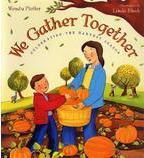
Share your ideas for celebrating autumn with your family by posting in the comments section and gain a chance to win one of my favorite Fall children's books, We Gather Together: Celebrating the Harvest Season, by Wendy Pfeffer.

I will be giving away TWO books, so submit your comment by Friday to be eligible for the giveaway. (Make sure your comment gets posted, as sometimes Blogger's comment submission form can be finicky!)

Fall Weekly Homeschool Rhythms

As September begins and our fall activities get underway, I thought it might be worthwhile to share our typical homeschool rhythms for the season. (Click on image to enlarge.)

Inspired by the Waldorf notion of daily, weekly, and seasonal rhythms, this chart shows the typical pattern of our days. The kids and I begin most days with reading books, playtime and baking. Then we get ready for our morning activities, including getting dressed and packing snacks. Each morning consists of some activity, usually loosely-structured and involving family members, friends, and the outdoors as much as possible.

Midday brings lunch and then nap time for my toddler and quiet time for my older daughter -- and mom! Then we usually read or play.

After quiet time and nap, we have a snack and prepare for an afternoon activity, followed by unstructured outside time for as long as possible, often including dinner outside. Finally, it's bath, books and bed.

Now, not every day moves this smoothly and we sometimes have hiccups or interruptions to these rhythms, but I find the most successful days for all of us follow the natural ebb-and-flow of calm periods, followed by active periods, followed again by calm, and so on. This allows for ample rest and reflection for all of us among the busy pace of our days.

These homeschool rhythms provide a sense of flow to our days and weeks, but we also do not feel fettered by them. For instance, if it's a rainy day on homeschool park day, we may go to a museum or the library or just stay home and do crafts. If we've been especially busy and I can sense we all need a break, we may skip a planned activity and recharge. Often if we seem a bit out-of-sorts, it can usually be attributed to a mixed-up rhythm without the calm-active-calm-active-calm cadence.

There is something comforting about these rhythms as we move from one season to the next, incorporating seasonal festivals and holidays into our weekly plans. They help us to capture the city's vitality in each new season, but remind us when to slow down too.

Holding On To Summer


Homeschooling offers the possibility of beautiful beach days well into September, but there is always something about an imminent Labor Day weekend that signals summer's end.

As the evenings get a little shorter, the mornings a little crisper, I am holding on to these late-summer days. Holding on to dinner picnics in the beaming sun, holding on to barefoot walks in the grass, holding on to swimmies and sandals and sun-splashed cheeks.

Mostly, I want to hold on to summer's simplicity. I've been marveling lately at the amount of time the kids spend in imaginative play using sticks, rocks, clam shells, and wild mushrooms. In particular, the quantity and variety of branches that the weekend hurricane tossed down have created endless hours of outdoor fun, as the kids build fire pits and forts, birds' nests and fairy kingdoms. As those who are inspired by Waldorf education already know, simple, natural, from-the-earth materials create countless opportunities for open-ended, creative play. I want to hold on to these simple "toys" even as the days grow shorter and colder and our outside time gradually wanes.

Summer is always a good reminder to slow down, to simplify, to clear schedules and use the natural world as our primary classroom. As the pace picks up this fall, and beach days grow fewer and far between, I will hold on to summer's simplicity -- and make sure we always have a good supply of sticks close by.


Quiet Play Time


Since reading more about the Waldorf philosophy of daily rhythms, I have been pleasantly surprised to see how well they're working in our home. As I mentioned in an earlier post, rhythms, as defined by Waldorf, are not schedules but rather patterns that seem to naturally occur in each household's day, week, month, year.

Waldorf also reinforces the importance of daily rhythms having a predictable pattern of stimulating, high-energy periods, followed by calmer, quieter periods so that children can adequately absorb the day's stimulation and reconnect with their own individuality and imagination. For my high-energy preschooler, our quiet play time in the middle of the day has been magical to watch. She creates elaborate play scenarios with lots of imaginative talking and planning. And lately she's been quietly reading her "Dick and Jane" books to herself. After about an hour of quiet play, I can tell that she has absorbed our busy morning's activities and is re-energized for our afternoon.

The only glitch I seem to have run into with quiet play time is that it fails miserably when Daddy or another fun guest is with us!

Copycat


I must admit that I have become a bit of a copycat mom lately. Inspired by the incredible homeschooling moms in our local homeschool groups, I have been incorporating new ideas, new routines, and new challenges into our day. For example, many of my friends don’t even own a television set—and somehow manage to quite nicely survive the day—so I decided several weeks ago to virtually eliminate routine TV watching in our home. The kids never watched much tv, but I have found that this new change has really helped us to maximize our days and create the type of home learning environment we desire. My homeschooling friends have also inspired me in other ways recently, including: helping me to integrate more Waldorf homeschooling components into our day (such as lots of outdoor nature time, unstructured play, and baking); motivating me to introduce new musical and artistic activities into our day; and stirring in me a personal desire to learn how to knit!

I think there is a tendency among moms especially to sometimes compare ourselves to each other. While I think it can be easy to fall into the trap of focusing on what we are not doing that other moms are doing, I have found it to be amazingly enlightening to learn about how my homeschooling friends approach their day and structure their learning. It has created new opportunities and new goals for me and has helped me to clarify the type of learning environment I want for my kids. It also reinforces a truth about homeschooling in particular and parenting in general: we don’t need to have all of the answers; we just need to have a willingness to learn, to experiment, to continuously improve, and to gain insights from others along the way.

Homeschool "Rhythms"


I was inspired to create a weekly homeschool "rhythm" worksheet from a homeschool-mom friend who was inspired to do the same from her Waldorf readings. I really like the idea of "rhythms," as defined by Waldorf, in that they help to segment each day into predictable patterns while ensuring lots of customization, spontaneity, and unstructured activities within the rhythm time blocks. (Click on photo to enlarge.)

Here is a sample week, although there are certainly many more creative ways to approach this process. In the past when I tried to create schedules or calendars, I always got hung up on feeling like I needed to include timestamps. But this approach allows you to consider your somewhat "fixed" aspects of the day, like meals, quiet time, outside time, reading time, etc., and then plug-in your daily/weekly activities into the other time blocks. I find it really helpful to see how the week is shaping up and it allows great flexibility in what we can do. Also, if I think we'll go to the museum on Friday and it doesn't happen, no big deal; it's just a way to plot out the week a bit more proactively-- and to reflect on how much learning takes place each week!

On a related note, we went to a fun little vintage boutique today in the nearby square and I bought an adorable metal egg timer. M loves playing with it and I had the idea that I could use it to better-define "quiet time" for her in the middle of each day. I set the timer for 45 minutes to an hour, after lunch and during J's nap, and when it rings, then quiet play time is over and it's our time together to read, do a puzzle, play a math game, etc. So far so good!

Spontaneous Sewing

Today I printed and cut-out paper Halloween pumpkins for M to color and play with. She's very interested in making paper kites these days, so I used a one-hole punch to cut a hole in the pumpkin stem and then tied a piece of yarn to it for the "kite" string. Then I left M on the deck to play and color. After several minutes, she showed me her pumpkin creation: she had cut holes around the perimeter of the pumpkin and had used the extra yarn to sew a perfect pattern around the edges-- complete with the up-and-down technique that Auntie taught her!

Tree Bark Tracing


This morning we had a wonderful arts and crafts class and were delighted that another homeschooler M's age is also in the class. J enjoyed and participated in the class as well. It took him a bit of time to warm up, but then he was immersed in playdough and loved cleaning up with the sponges-- and of course snack time.

This afternoon we met our friends at some local "woods" and I brought along paper and crayons for the kids to do some tree bark tracing, a wonderful activity inspired by my recent Waldorf philosophy reading. Along the same lines as Waldorf and Charlotte Mason, we are spending as much time as possible outdoors these days, including eating as many meals as possible outside. Today we managed to get about 6 1/2 hours of pure outside time! The woods are so fun for the kids and they had a great time collecting acorns and digging for worms.

I also decided to revamp our entire fall schedule. I felt like some things weren't working for us, we were overscheduled, and I wanted our afternoons to be open and stress-free and allow for plenty of outside time-- particularly while the weather is still nice this fall. So, I eliminated swimming and ballet from our schedule and our afternoons now allow for much more unstructured play time. Live and learn.

Sewing lesson

Thanks to Auntie's guidance and fun craft, M demonstrated that she is a skilled seamstress! Auntie brought M a kid's beginner sewing craft yesterday and they had fun sewing together a little felt puppet. What a great skill and a wonderful craft-time lesson!

Lots of Cooking

When the kids wake up at 6:00 each morning, they hit the ground running and so I try to find some fun activities to occupy us for a little while until it's a respectable time to venture outside or to our morning activities. As such, we've been doing a ton of cooking and baking lately! Now that the kids have their Learning Tower and are able to safely and easily stand with me at the counter to cook, it's made the entire process much less stressful and more enjoyable. This morning we made homemade applesauce and oatmeal muffins, and then a lasagna this afternoon. So much fun-- and so productive too in my quest to be a bit more "homemade."

---
Homemade Applesauce Recipe

Ingredients:
4 or 5 organic apples - peeled, cored and chopped
3/4 cup water
1 tablespoon white sugar (optional)
1/2 teaspoon ground cinnamon

Directions:
In a saucepan, combine apples, water, sugar, and cinnamon. Cover, and cook over medium heat for 15 to 20 minutes, or until apples are soft. Allow to cool, then mash with a fork or potato masher.